Thursday, 19 March 2020

NIGERIA: GENDER-SENSITIVE AMENDMENTS TO THE ELECTORAL ACT

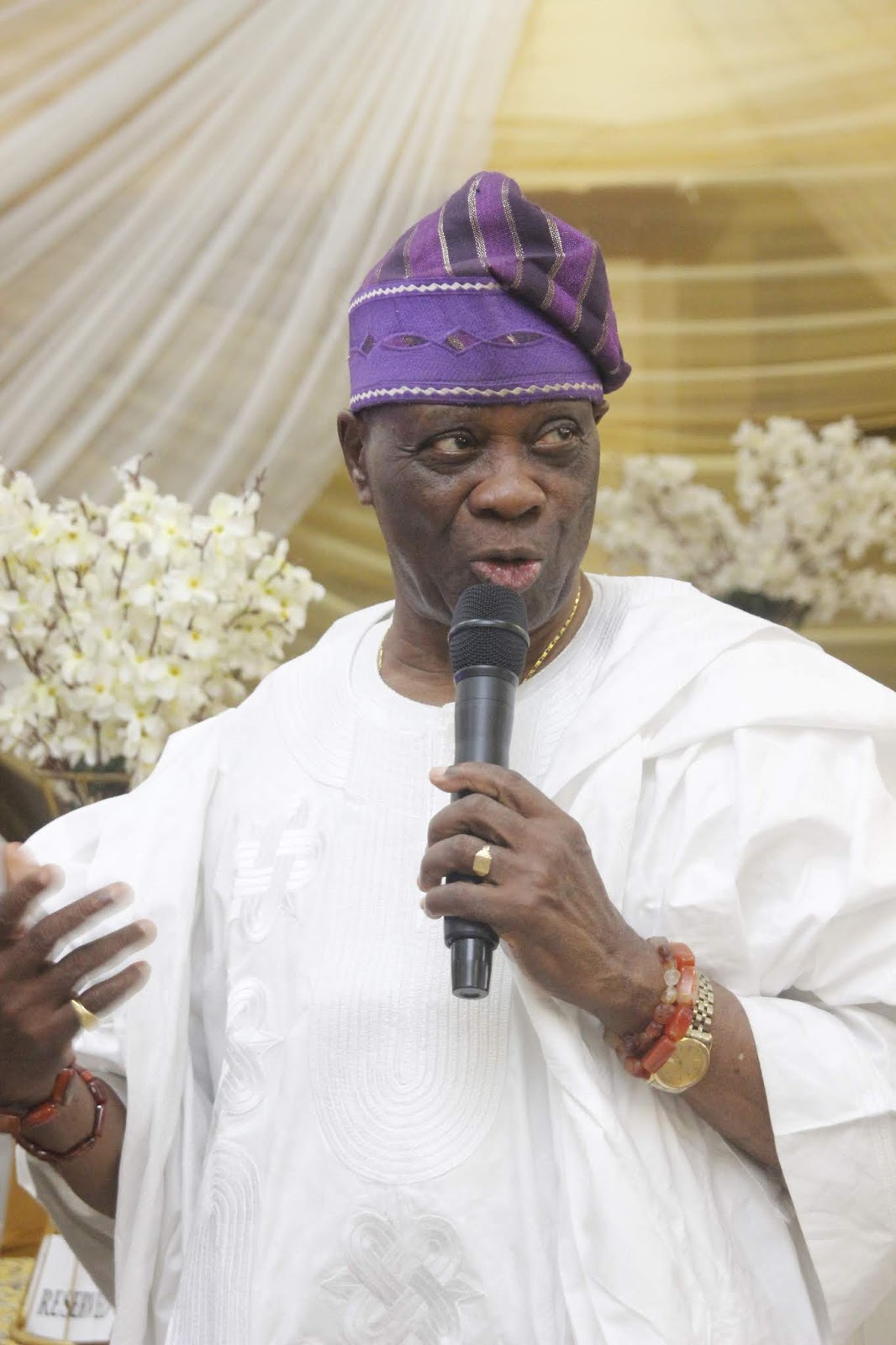
The 18th of March 2020 was the day stakeholders converged in Abuja to make their inputs into the on-going discussion on amendment to the Constitution and the Electoral Act. The focus of the meeting was 'gender sensitivity' in the content and language of the two documents. I was a major stakeholder at the meeting supported by NDI (National Democratic Institute), USAID and UKaid. Barr. Esther Uzodinma (Co-chair Nigeria's Election Situation Room) gave a good account of herself as Facilitator at the meeting.

Photo above L-R: Dr. Dayo Oluyemi-Kusa & Dr. Stephen Snook (NDI's Country Director & Chief of Party)

The following quote is from the NDI team at the event as regards the rationale for the meeting. Let them speak for themselves:

'The inclusion and participation of traditionally under-represented groups like women, youth and marginalised groups such as persons with disabilities is critical in representative democracies. Democracy delivers more when the political environment is made conducive enough for everyone to contribute to decision-making and nation-building. As government instititions at the federal and state levels begin the exhaustive process of Constitutional and Electoral reforms, there is the need to review all clauses bearing on gender equity in the 1999 Constitution, the Electoral Act and the Electoral Offences Bill. The recommendatios would then be sent to the National Assembly...'

Photo above L-R: Dr. Dayo Oluyemi-Kusa & Cynthia Mbamalu (Programme Director, YIAGA Africa - Advocates of the 'Not Too Toung To Run' phenomenon)

It was noted that the word 'Chairman' appears at least 66 times in the Constitution in reference to positions that may be held by men or women! Similarly, the word 'he' is used on many occasions to refer to people that may be male or female. The language of the Constitution should be gender-neutral. Chairperson is more gender-neutral. The consisitent use of masculine pronouns in legal instruments leaves the impession that women could not be in positions of authority! This falls short of best standards for inclusion and contributes to making women marginalised and under-represented in decision-making processes.

Photo above L-R: Ms. Asmau Leo (Representative Women In Public Service), Dayo & Barr. Ebere Ifendu (President, Women In Politics Forum - WIPF)

Other sections interrogated in the Constitution are: Sections 14 (2)d, 14 (3) & (4), 40, 42, 48, 50 (1)c, 92 (2), 142 (1), 147 (7), 187 (1), 222, 223 (1)c, etc. In the Electoral Act as amended, the following sections were critically analysed and exhaustively discussed: Sections 2, 9 (1), 10 (3), 23c, 81, 87, 90, 91 (2) - (7), 91 (10), 94, 95, 96, etc. Critical aspets of the Electoral Offences Commission Bill (SB220) were also discussed.

The debate/discussion to make these essential documents gender sensitive continues in texts, traditional and social media, etc...

Related Links

*Much work remains to be done on Nigeria's Electoral Bill, 2021   https://cddwestafrica.org/.../much-work-remains-to-be-done-nigerias-electoral-bill.../ 

Saturday, 14 March 2020

MY DAD - SIMEON ABIODUN OLUYEMI (1931-2019)

My iconic dad, Simeon Abiodun Oluyemi (Dec. 1931 - Dec. 2019) passed on 10th December 2019 and was buried 28th February 2020. He was aged 88 years. I am indeed very proud as his first fruit! He retired as National Sales Manager, Lever Brothers Nigeria Ltd. (now Unilever PLC). He shares the same vault (at New Ikoyi Cemetry) with the love of his life, our mom, Rosaline Olaitan Oluyemi (nee Adeyemi) who was buried in December 2012. The burial reception was held at Island Club, Onikan, Lagos. Dad was a life member of Island Club.

Our exceptional father was born on 24th December 1931 (hence the name: 'Abiodun', which literally means 'born during the festive season') to our grandfather who we affectionately called Baba Lagba and our grandmother, Mama Makun. Abiodun was the second of four surviving children of Mama Makun by Baba Lagba. He was born in Ijebu Waterside, but the family also had roots in Epe and Ijebu-Ode (Ita N'tebo Street). Baba Lagba, a truly impessive man was at least 6 feet 5 inches tall. As the eldest offspring, I remember that each time Baba Lagba visited when I was a toddler, he had to bend strenuously to enter through doors!

                              Photo above: My dad, Pa Simeon Abiodun Oluyemi in his lifetime

Dr. Dayo Oluyemi-Kusa's tribute to Dad:

Dad was simply unique. His middle name vis-a-vis his children was 'sound education embedded in exemplary behaviour'. I still keep the red umbrella-shaped dress dad bought for me in 1969 from 'Kingsway Stores' Marina, Lagos for my interview into Queen's School, Ibadan. Though the dress is now old and tattered, I have told the story of my loving father, who prioritised education to my children. Apart from buying a special dress for me for the interview, he took me to the hairdresser to have my hair fixed! He drove me from Lagos to Ibadan the day before the interview!

Then we checked into Lafia Hotel, Ibadan (I don't know if the hotel still exists). From 7pm after dinner till 12 midnight, dad drilled me using sample questions from 'C.V. Durrell' - a standard Mathematics text in those days. Dad also made me revise English and Verbal/Quantitative Aptitude tests! Expectedly, the interview was a work-over for me. I was top of the admission list. Thanks to dad. This caring nature of dad was evident at each stage of my life. Even when I was an undergraduate at the University of Ife (now Obafemi Awolowo University), in the 1970s, my dad never failed to visit me monthly!

The same passion with which he loved our mother, Rosaline, was extended to us, the children. Dad excelled at everything he did. At work, he was always a shining star at every duty post and he eventually retired as National Sales Manger at Lever Brothers Nigeria Ltd (now Unilever Plc). My siblings and I owe our command of the English language to our dad, who ensured that before the age of six, each child knew how to correctly pronounce words before the tongue ceased to be malleable! Thank you dad for your love and the sound education you ensured we acquired. You have extended the same level of care to all your grandchildren. Whatever I am today, it's because of you and mom. On behalf of my sons, your grandchildren (Dr. Tope Kusa, Seun Kusa & Ayo Kusa), I'm eternally grateful to you, dad!

                            Photo above: Formal invitation to events to celebrate dad's life

The story of dad's life (contd.)

As a dynamic teenager who had just completed his Primary School education in Ijebu-Ode, Abiodun came under tutelage with the local Marine Corps/Seafarers affiliated with the parent body in the UK. There he quickly learnt how to operate ships with dexterity. As fate would have it, while carrying out his duties as an Assistant Operations Officer of a ship, the vessel was boarded by an Irish Reverend Father who took particular interest in him. When he alighted the ship, the Reverend Father asked the young Abiodun if he would like to become a teacher because the former had watched the latter with keen interest as he operated the huge ship at such a tender age. The Reverend Father felt Abiodun would do well as a teacher.

This brief but rare encounter changed the course of Abiodun's Life. He contacted his to be benefactor, lived with the Reverend Father and later attended St. Leo's Teacher Training College, Ijebu-Ode, where he was awarded the Teachers' Grade II Certificate (the College was later moved to Abeokuta, Ogun State). He started teaching in a Primary School and in a short while he moved to Odogbolu Grammar School where in record time he rose to the position of Vice Principal. While teaching at Odogbolu Grammar School, he met the love of his life, the delectable Miss Rosaline Olaitan Adeyemi. They exchanged marital vows in 1958 and lived happily as man and wife for 54 years until Rosaline's demise in November 2012. Her demise affected him negatively.

Photo above L-R: Dr. Dayo Oluyemi-Kusa (Ph.D Peace & Conflict Studies) hugging younger sister, Dr. Moyosore Oluyemi (Ph.D Marine Biology - Eco-toxicology) as dad's casket arrives family house in Surulere, Lagos.

Abiodun secured gainful employment in many blue chip companies. He was a journalist with the  defunct Morning Post Newspaper in the 1960s where he later rose to become Features Editor. Then came his appointment as Brand Supervisor and subsequently Manager in Cadbury Nigeria Ltd in the 1970s. His sojourn in Shell Petroleum as Marketing Manager was rather brief. Dad was indeed restless and ambitious because he wanted to give his family the very best, and he did!

Photo above R-L: Dayo & sibblings - Olatunji Oluyemi (M.Sc Finance, M.A. Theology, MBA, ACII, FCII & Former MD Royal Exchange Assurance Nigeria - REAN) & Dr. Moyosore Oluyemi

Not done yet, the dynamic young Abiodun 'landed' in Lever Brothers Nigeria Ltd. (now Unilever PLC) in 1975 as Regional Sales Manager, until he retired in 1985 as National Sales Manager. While at his various jobs, Abiodun went to the UK and the USA to attend courses, where he obtained several awards. Post retirement, Abiodun was a veritable Consultant to many outfits, including start-ups he helped to build. Many flourishing organisations also gained from dad's wealth of experience.

                                Photo above: Dayo leading the casket bearers to the family house.

Beyond his professional prowess, dad was a notable Lagos socialite. In the 1970s, dad in the company of mom was a regular face at the defunct 'Caban Bamboo' Club for their monthly couples' night out. Later, dad joined Island Club, Onikan, Lagos. In the 1980s, dad was the Assistant General Secretary of the Island Club and remained a life member till his passing. He supported many humanitarian causes in church, the corporate world and NGOs. A devoted Christian, he was Patron of St. Rita and St. Mary's Society of Our Lady of Fatima Catholic Church, Aguda, Surulere for several decades.

                              Photo above: Catholic Reverend Fathers officiating @ the Funeral Service

Abiodun was a man particularly devoted to his family. He enjoyed advising his growing children and indeed grandchildren about life. The union of Abiodun and Rosaline was blessed with four children: Adedayo, Olusoji, Olatunji and Moyosore. See the link to the write up by my husband, John Olufemi Kusa about my mother, Rosaline Olaitan Oluyemi, when she passed on in 2012: thenationonlineng.net/olaitan-roseline-alaba-oluyemi-oct-1936-nov-2012/. Abiodun was a doting dad, grandpa and mentor to many. He'll be missed by all those whose lives he touched positively in various ways during his fruitful life. May his gentle soul rest in the bosom of the Lord. Amen.

                      Photo above L-R: Moyosore & Dayo dancing @ the funeral service

Photo above: Chief Olu Falomo, Chairman Reckitt Benckiser Nig. Ltd & dad's loyal friend speaking @ the reception @ Island Club, Onikan, Lagos.

                         Photo above: Chief Olu Falomo 'spraying' Dayo @ the reception.

                              Photo above L-R: Dayo & Moyo dancing @ the reception.

                                                       Photo above: Dayo in her element

                                              Photo above: Mom & dad in their lifetime.

               Dad on his 70th birthday with his daughters. Photo L-R: Moyo, Dad & Dayo


                                                     Mom & Dad in their lifetime


Photo above: 'Dust to Dust' by Dayo (middle) @ New Ikoyi Cemetry, Lagos: L-R Dr. Moyosore Oluyemi (Sister) & Olatunji Oluyemi (Brother)

                                              Photo above: Dayo dancing @ the reception.

                            Photo above: Dayo dancing with Chief Olu Falomo @ the reception.

                           Photo above: Dayo entering New Ikoyi Cemetry for dad's interment.

Photo above L-R: Ms. Yemisi Ransome-Kuti (Founder, Nigeria Network of Non-Governmental Organisations{NNNGO} & Matriarch of the Ransome-Kuti family) & Dayo.

                                      Photo above: L-R: Dayo, Moyo & Fred Anyaegbunam

                              Photo above L-R: Moyo, Ms. Yemisi Ransome-Kuti & Dayo

Photo above: Casket bearers displaying their art just before dad's 'lying in state' @ the family house in Surulere, Lagos.

                  Photo above: Officiating Catholic Reverend Father extolling dad's virtues

                     Photo above: Tombstone for mom & dad @ the vault in Ikoyi cemetry


Thursday, 12 March 2020

INTERNATIONAL WOMEN'S DAY 2020

Could I have been at a better place on the 9th of March 2020? I was at the OXFAM event in Abuja, where women were robustly celebrated! The theme for this year is 'An Equal World Is An Enabled World'  #EachForEqual  #IWD2020.Then came 'The Street Project's' theme-relevant spoken word rendition, where the concept of the 'Impostor Syndrome' (IS) was mentioned in passing. In my intervention, I explained the concept further, especially how it affects the average female in Nigeria on account of the partriarchy-driven socialisation process. IS makes the individual feel unworthy of any elevated position in which she finds herself! She doubts her self-worth!

Photo above L-R: Dr. Dayo Oluyemi-Kusa (Conflict Transformation & Gender Expert) & Constant Tchona (Country Director, OXFAM in Nigeria)

The gender-sensitive Country Director of OXFAM, Constant Tchona in his speech said 'If we want to fight poverty, we must first fight inequality'. Constant said equality is not a women's issue, but indeed a human rights issue. He reeled out statistics which brought to the fore the fact that 'the five richest Nigerians could take the country out of poverty...'. The presentation of the report: 'Time to Care: Unpaid & Underpaid care work and the global inequality crisis'. www.oxfam.org. The presenter of the report, Henry Ushie, gave a good account of himself when he made his presentation interesting by referring us to the link for the 'Global Care Calculator' - https://www.carecalculator.org. The bottom line was that after going through the gamut of various types of unpaid work on the site and summing up same for the 'urban' woman in Nigeria, the audience realised that if women were actually paid for such labour, the cumulative could be Trillions of US Dollars!

Photo above L-R: Dr. Dayo Oluyemi-Kusa & Ramatu Umar-Bako (Head of Influencng & Public Engagement, OXFAM)

To be sure, it is 'socially relevant labour' that has been unjustly appropriated as 'unpaid labour'! This needs to be corrected. This is what 'Generation Equality' is all about...

Wednesday, 12 February 2020

BEST PRACTICES FOR RESOLVING FARMER-HERDER CONFLICTS IN WEST AFRICA

The ECOWAS-UNOWAS-ISS Workshop on 'Best practices for resolving farmer-herder conflicts in West Africa' was held in Abuja, 11th - 12th February 2020. The parley brought together academics. practitioners, members of the Diplomatic Corps, Crop farmers, Pastoralists, NGOs, CBOs, etc. I was a major stakeholder at the workshop. Some of the sub-themes are:

*Identification of the structural causes & dynamics of conflict between farmers and herders - local level & think tank perspectives.
*Towards peaceful co-existence based on the causes of farmer-herder crises.
*Additional tools and support needed to better prevent farmer-herder conflicts.
*Extant technologies for the prevention of farmer-herder conflicts: Experiences from Nigeria, Ghana, Mali & Senegal.
*Sensitising about regulations on transhumance at regional, national & local levels.
*Way forward: Road-map for resolving farmer-herder conflicts in West Africa.

Photo L-R: Khadija Ardido (Myetti Allah Cattle Breeders' Association - Women's Wing, Dr. Dayo Oluyemi-Kusa & Lara Gruben (Political Affairs Officer, UNOWAS)

Some of the participants are:

*Jesper Kamp - Ambassador of Denmark to Nigeria
*Dr. Remi Ajibewa - Director, Political Affairs, ECOWAS
*Ms. Ngozi Amu - Head Research, UNOWAS
*Dr. Dayo Oluyemi-Kusa - Conflict Transformation Expert/Member Forum on Farmer-Herder Relations in Nigeria (FFARN)
*Nnamdi Obasi - Senior Adviser, International Crisis Group (ICG)
*Sher Ali Nawaz - Country Director, Search for Common Ground (SFCG)
*Nathaniel Awuapila - Executive Facilitator, Civil Organisations Research Advocacy & Funding Initiatives Development (CORAFID)
*Ms. Julie Sanda - National Defence College (NDC)
*Ngizan Chahul - Nigeria Association of Women in Agriculture
*Kade Dabas Keita - Regional Director, Elevage de Boke, Guinea
*Mamadou Moustapha Cisse - Service depatrtemental de l'elevage de Linguere, Senegal
*Blamah Jalloh - RBM
*Bakary Tienta - ONG Y-G-TU, Mali
*Osman bin Ahmed - Regional Chief of Fulani of Ashanti, Ghana
*Aissatou Lamarana Diallo - Pastoral Association, Guinea
*Abdoulaye Garba Maiga - Counseil Regional de Mopti, Mali
*Cherif Lanceny - Secretaire General Chambre d'Agriculture, Guinea
*Safietou Balde - ONG CERFLA, Senegal

In my intervention, I said I was more inclined towards 'good practices' rather than 'best practices'. For me, we are constantly striving to be better. Therefore, we may never achieve our best while we are on mother earth. Some traditional methods of conflict transformation were highlighted. It was pointed out that these could assuage the farmer-herder conflict if 'resurrected' and deployed. Women should organise themselves into pressure groups to seek protection before, during and after farmer-herder crises.

In some areas, there is rotational use of land by farmers and herders. The terms for such rotation are mutually agreed. It was recommended that farmers should stop farming on grazing routes. Most of the time, the herder is not heard. We need to listen more to the yearning of herders. Many herders are under-age. The ECOWAS Proocol on Transhumance which stipulates that no herder should be below 18 years should be respected. There is the need to place more emphasis on prevention of farmer-herder crisis rather than mitigation of same. Prevention is always better than cure!

There should be more evidence-based research on the farmer-herder crisis. Platforms should be created for responding to the farmer-herder crisis. We should always bear in mind that cattle-rearing is also part of agriculture. There should be an integrated approach to mitigating the crisis. Mining activities further complicate the crisis (e.g. Zamfara State, Nigeria).

Some of the identified causes of the farmer-herder crisis are:

*Climate change.
*Proliferation of Small Arms & Light Weapons (SALWs).
*Poor governance.
*Lack of awareness about policy documents.
*Unequal distribution of resources.
*Criminality.
*Extremist influence.
*Lack of protection for women & children.
*Social media & false narratives.
*Rapid population growth.
*Absence of dialogue platforms.
*Need for evidence-based research.

Some strategies for the prevention of farmer-herder crisis are:

*Transition from pastoralism to ranching
*Setting up of peace-building committees.
*Establishment of open communication channels.
*Payment of compensation.
*Creation of awareness about climate change.
*Tree-planting campaigns.
*Use of technology/artificial intelligence/robotics/drones/block chain etc.
*Streamlining citizenship criteria.

The following are the 'next steps' agreed upon:

*Take a 'census' of extant academic documents on the farmer-herder crisis.
*Publish books, policy papers, pamphlets, occasional papers, bulletins, magazines etc on good practices in the prevention and management of the crisis across West Africa and the Sahel.
*Strengthen traditional institutions with a view to making them more effective in their role as Mediators in the farmer-herder crisis.
*Synergise the numerous initiatives aimed at mitigating the crisis.
*Leverage on the fact that the youth are adept at the use of technological devices. Their technological know-how could be employed for system-relevant artificial intelligence innovations. If the youth are kept busy in this positive manner, the youth bulge could cease to be a liability!
*Focus more on conflict prevention.
*There should be a link between local, national and regional effort at conflict transformation as regards the farmer-herder crisis.
*Constitute pressure groups to extract 'political will' from leaders &
commitment to financing conflict transformation initiatives.

The discussion continues on the corridors, between individuals, in groups, at the level of government, at public fora, etc

Related Links

*France & allies establish new task force in the Sahel   https://www.aljazeera.com/news/2020/03/france-allies-establish-task-force-sahel-200328075257444.html
*The warning signs are flashing red: The interplay between climate change and violent extremism in Western Sahel   https://icct.nl/publications/the-warning-signs-flashing-red.../
*ECOWAS, UNOWAS 7 ISS chat path to resolving farmer-herder conflicts in West Africa   https://www.ecowas-unowas-iss-chart-path-to-resolving-farmer-herder-conflicts-in-west-africa/
*ECOWAS & the dynamics of conflict/peace-building by Consortium for Development Partnerships   (CDP)   https://t.co/h8VrdodjXf
*Farmer-herder clashes: The new normal?   nextierspd.com/farmer-herder-clashes-the-new-normal/
*Nasarawa state government & CDD in moves to end farmer-herder crisis    youtu.be/zfwTI-4DVkg
*Nigeria: Kebbi state empowers 2,778 women, men with livestock    guardian.ng
*Reviving cattle grazing routes in Nigeria     https://nextierspd.com/reviving-cattle-grazing-routes/


Sunday, 19 January 2020

ECOWAS HUMAN RIGHTS DAY & PLWDs/IDPs/REFUGEES/RETURNEES/STATELESS PERSONS

The 2020 ECOWAS Human Rights Day was celebrated in Abuja on the 16th of January in collaboration with Centre for Democracy & Development (CDD). I am a Senior Fellow of CDD. The theme of this year's celebration is 'The Right to Education for PLWDs, IDPs, Refugees, Returnees and Stateless Persons'. I was a facilitator at the conference.

Dr. Dayo Oluyemi-Kusa speaking @ the ECOWAS/CDD conference on the Rights of PLWDs, IDPs, Refugees, Returnees & Stateless Persons

Some of the participants were:

*Tony Ojukwu - Executive Secretary, National Human Rights Commission (NHRC)
*Mrs. Sadiya Umar Farouq - Minister of Humanitarian Affairs
*Senator Basheer Garba Mohammed - Federal Commissioner for Refugees, Migrants & IBPs
*Prof. Bappa Aliyu-Muhammadu - Executive Secretary, National Commission for Colleges of Education (NCCE)
*Dr. Masa'udu Adamu Kazaure - Executive Secretary, National Board for Technical Education (NBTE)
*Osai Ojigho - Director, Amnesty International, Nigeria
*Alozie Amaechi Godfrey - Director, Humanitarian Affairs, ECOWAS
*Emmanuel Okorodudu - Head Division, Democracy & Good Governance, Department of Political Affairs, Peace & Regional Security, ECOWAS
*Dr. Dayo Oluyemi-Kusa - Conflict Transformation Expert & Senior Fellow, CDD
*U. Jasper - Programme Officer, CDD
*Rep. of ICRC
*Rep. of IOM
*Rep. of the Office of the Coordination of Humanitarian Affairs (OCHA)
*Rep. of UNESCO West Africa

Then, participants viewed the documentary on the right to education for PLWDs, Refugees, Returnees & stateless persons.

A cross-section of participants viewing the film on 'Right to Education for PLWDs, IDPs, Refugees, Returnees & Stateless Persons

Some of the sub-themes discussed for protecting the right to education for PLWDs, IDPs, Refugees, Returnees & Stateless Persons were:

*Mechanisms
*Processes
*Role of home vs host states
*Who is a 'stateless person'?
*From Policy to Action - Opportunities & Creative Frameworks for developing/deploying formal Vocational/Technical Education Policies
-The role of Artificial Intelligence (AI), Robotics, etc
-Psycho-social support
-Invention & Creative Hubs
*Effective Camp Management for IDPs & Refugees
*The Kampala Convention (KC): Is it possible to replicate this at the ECOWAS level?
-Niger as 1st state to domesticate the KC.
-Can other West African states learn anything from Niger?
*Harmonisation of the educational system for the Francophone & Anglophone countries?
*Coordination of activities of Ministry of Humanitarian Affairs, NCRMIDPs, ECOWAS, CDD, etc
*Lobby for increase in Education Budgets
*Human Rights as part of all Development Policies
*The use of Traditional Methods of Conflict Transformation in dealing with challenges as they arise
*CSOs partnership with ECOWAS
*Special care of vulnerable females e.g. Safe Schools
*Role of the Private Sector & Corporate Social Responsibility (CSR)
*Terrorism and DDRR among this demographic
*Explore the use of extant local languages for instruction
*ECOWAS Protocol on Education
-Cultural Education Rights
*The use of Traditional & Social Media to promote the cause of this demographic
-Communication Strategy
-Strategic Communication (StratCom)
*Specialised Education Reporting

                                         Panelists discussing a sub-theme @ the conference

                                                                         Group photo

It was a fruitful and timely discourse on the vital issue of effective inclusion of PLWDs, IDPs, Refugees, Returnees & Stateless Persons in the educational system across the West African sub-region via ECOWAS with the support of individual nation-states, CSOs, CBOs, the Private Sector, etc. The conversation continues via #ECOWASHumanRightsDay. There was also the resolve to work with viable Innovation Hubs for the effective revamping of the education of persons that fall within the demographic in question...

Related Links

*ECOWAS tasks members on increased budget for IDPs, Refugees' Education   https://t.co/1cNe7tXkZT
*CDD solicits inclusion policy for PLWDs, IDPs in education   https://t.co/pMGlWegy2M
*Language endangerment: Why & how should we protect them?   https://rightforeducation.org/2020/01/language/endangerment/
*West African states marred in controversy over single currency   allafrica.com/view/goup/main/id/00071672.html
*How important could technology be for literacy in African countries?   https://rightforeducation.org/.../technology-literacy-africa
*How can Africa improve access to quality education?   http://mif.media/gr-201j
*The Almajiri crisisin the North: A cry for our children by Nigerian mothers   https://newsdiaryonline.com/the-almajiri-crisis.../
*Is West Africa's Eco Currency just an echo of the colonial past?   https://issafrica.org/iss-today/is-west-africas-eco-currency-echo-colonial-past/
*ECOWAS & Spain to strengthen the voice of women in peace and security   https://www.ecowas.com/spain-strengthen-voice-women-peace-security
*The function of education is to think intensively and critically. The most dangerous criminal may be the man gifted with reason, but with no moral  -  Martin Luther King Jr.   www.peace-ed-campaign.org/mlk-the-purpose-of-education/
*UNICEF has released new data showing major discrepancies in the way public education funding is distributed   www.peace-ed-campaign-org/unicef-report-addressing-the-learning-crisis-an-urgent-need-to-better-finance-education-for-the-poor-children/
*Why are millions of children out of school in Africa?   https://www.youtube.com/watch?
*Africa's colonialism of the English Language   theguardian.com/commentisfree/2020/jan/29/africa-colonialism-english-language.../
*Changing the lives of 25,000 children: Cote d'Ivoire building schools with bricks made from plastic waste   https://wef.ch/34..N4dL  #sustaiability  #innovation
*$797m outstanding levy: ECOWAS Parliament holds session on improving funding     nannews.ng


Friday, 27 December 2019

CONFLICT TRANSFORMATION @ XMAS

Merry Xmas! But more could be achieved for the benefit of mankind if we, Chartered Mediators & Conciliators leverage on the relatively positive mood of individuals and indeed groups to transform as many conflicts as possible! Xmas and New Year constitute a continuum for many, where and when the children are taken out to visit friends and family. I believe such occasions, beyond merriment should enable trained Mediators settle lingering family and other disputes between individuals. The 'toxic auntie' is so perceived because other members of the family have failed over the years to be empathic towards her and at least for once see things from her own point of view.

 Photo above: Dr. Dayo Oluyemi-Kusa @ the State House Conference Centre, Aso Rock Presidential  Villa, Abuja on the 19th of December 2019 for the annual Christmas Praise Concert hosted by Nigeria's Vice President (Prof. Yemi Osibajo) & wife.

  Photo above: Dr. Dayo Oluyemi-Kusa & a friend @ the 2019 Aso Rock Presidential Villa annual Xmas Praise Concert

"Xmas is literally the Mass of Christ, the day on which Christians celebrate the birth of Jesus Christ. The Western date for Jesus Christ's birth is quite arbitrary. It was chosen by Pope Leo I, Bishop of Rome (440-461), to coincide with the Festival of the Saturnalia, when Romans worshiped Saturn, the sun god. The date of the feast varies with Christian denominations. Western Christians celebrate the Nativity on a fixed date, 25th December. Some Eastern Orthodox Christians celebrate it on 6th January together with Epiphany, the revelation of the infant Jesus to the three wise men. The Greek and Russian Orthodox Churches celebrate Xmas on 7th January and Epiphany on 19th January"

-Source: theconversation.com/how-did-we-come-to-celebrate-christmas-66042

Jesus Christ is the reason for the season. Jesus Christ is the embodiment of love, sacrifice, forthrightness, humility, empathy, etc. Xmas should be a period of spiritual retreat for us all, and not just a time for revelry. We should reflect on the teachings of our Lord Jesus Christ. My charge to fellow Chartered Mediators & Conciliators is that they should capitalise on the Xmas mood, when even non-Christians join in the celebration to do what they know how to do best - transforming/resolving conflicts for mankind's harmonious existence on earth! Once again: Season's Greetings! 

Related Links

*An entire Louisiana town was dusted with holy water for Xmas   edition.cnn.com/2019/12/24/us/holy-water-crop-duster-cow-island-trnd/
*How Maths can help you create the perfect Xmas day   newscientist.com/article/dn28691-how-maths-can-help-you-create-perfect-xmas-day/
*Pope's Xmas message: Do good even if others are not good to you   https://www.detroitnews.com/story/2019/12/24/popes-xmas-message-good-even-others/
*Don't let workplace conflict blight your Xmas   https://wearethecity.com/dont-let-workplace-conflit-blight-your-xmas/
*Power is central to conflict   https://www.linkedin.com/pulse/power-central-conflict-even-hoffman/
*Listening barriers during conflict: Break them down with these questions   https://bit.ly/2YCPXqO
*Integrating peace into development & humanitarian work/response: Inter-peace launches 'Peace Responsiveness Facility'   https://www.interpeace.org/2020/05/integrating-humanitarian-responsiveness/
*Conflict denial in perspective   https://bit.ly/3aWqQmQ
*'Productive Conflict' can accelerate innovation    https://bit.ly/2WGSul4
*Violence in Africa: Trends, drivers & prospects till 2023   issafrica.org/research/africa-report/violence-in-africa-trends-drivers-prospects-till-2023/
*UNIDR creates new tool to help people avoid IEDs   https://twitter.com/UNIDR/status/127568508.../
*Conflict resolution should top Africa's 2020 agenda   http://ow.ly/YgW050xNRNr
*How to make even your toughest resolutions stick   https://newscienti.st/2sUmYkH
*Reflective practice in Conflict Resolution by Michael Lang   https://lnkd.in/eSN4y_N
*Prepare for the difficult holiday conversation with the 'Angry Uncle Bot'   https://www.mwi.org/prepare-for-difficult-holiday-conversation-with-angry-uncle-bot
*The Play Theory of Hunter-Gatherer Egalitarianism   https://www.psychologytoday.com/us/blog/freedom-learn/201908/the-play-theory-of-hunter-gatherer-egalitarianism/
*The concept of 'Ubuntu' can teach us 3 ways to take better care of ourselves while resolving conflicts   thriveglobal.com/stories/how-the-concept-ubuntu-can-teach-us.../
*Hurting stalemate in international interventions: Analysis of the African Agency in the IGAD-led engagements in the South Sudan crisis, 2013-2017 - Muema Wambua   https://rowman.com/.../beyond-history-african-agency-in-igad-led-engagements-in-south-sudan-crisis/
*Indigenous dispute resolution and national reconciliation: Learning from the Gacaca Courts in Rwanda   https://www.icermediation.org/indigenous-dispute-resolution-national-reconciliation.../
*Conflict sensitivity: 5 lessons for donors & aid agencies   https://bit.ly/34WPINN
*The Kilmann Organisational Conflict Instrument: Conflict resolution in the workplace   https://bit.ly/2YGhzeD  #organisations  #conflict  #Peacebuilding  #worklifebalance-integration  #leadership
*Conflict resolution: A Secondary School curriculum    https://web.facebook.com/photo/
*Conflict spikes in Congo's Ituri   thehumanitarian.org/features/2020/05/05/ituri-congo-hema-lendi-codeco-demobilisation/
*Social media impact on conflict dynamics: A synthesis of 10 case studies and a peace-building plan for tech   https://toda.org/policy-briefs-and-resources/social-media/
*The drivers of deadly conflict emerge in the US   https://t.co/XgZhM6LazR?amp=1
*An uncomplicated way to reduce the pitfalls of emotional memories during conflict resolution   https://tammylenski.com/emotional-memories-during-conflict-resolution/
*Conflict resolution: Apology right, not apology litehttps://www.cinergycoaching.com/2020/06/apology-right-not-apology-lite/
*Collective & generational trauma in addressing/understanding protracted violent conflicts   https://corechange.ch/is-it-all-down-to-trauma/
*Divide & Profit: How the US-Mexico border crisis can be understood as a profitable ethnic conflict  https://www.youtube.com/watch?
*How to avoid common pitfalls that lead to conflict @ Xmas    https://bit.ly/3m6JxIj
*Tips on how to save money @ Xmas    mysalaryscale.com/blog/tips-save-money-xmas


Monday, 25 November 2019

AFRICANS & IRREGULAR MIGRATION

A book, 'Scaling Fences: Voices of Irregular African Migrants to Europe' was launched in Abuja. It is a publication of UNDP. Why would anyone sell all his belongings and borrow money just to travel into the unknown? Migration itself is a good thing, but when it is 'irregular' and young Africans die in droves on the high seas before they reach their destination, then something is wrong.

Photo above L-R: Sunday Dare (Nigeria's Minister of Youth & Sports), Mrs. Adejoke Adefulire (SSA to Nigeria's President on SDGs & Fmr. Deputy Governor of Lagos State), Mrs. Amina Mohammed (UN Deputy Secretary-General & Nigeria's fmr. Minister of Environment) & Dr. Dayo Oluyemi-Kusa (Independent Consultant/Conflict Transformation Expert) @ the launch of 'Scaling Fences...'

The 124 page book is easy to read and well illustrated with maps and compelling photos. The references are distinctly annotated to the delight of any seasoned academic! There are 4 major chapters in the book:

*Life at home
*Motivation & drivers
*Life on the other side
*Attitudes to return

A dismal picture is painted of 'life at home'.   Poverty levels are very high. Unemployment is rife. There is a lack of basic facilities like - water, electricity, housing, etc. Poor governance is a major factor. 'The core message arising from this study, that migration is a reverberation of uneven development and particularly of a development trajectory that is failing young people, sends a strong signal to policymakers'. (Scaling Fences, p. vi).

What are the drivers of irregular migration? 'Irregular migration for those interviewed, is an investment in a better future. This view is embraced by individuals whose development trajectory is already in ascendance, enabling a radical rejection of the constraining circumstances at home. This mindset enables them to scale metaphorical and even physical fences in order to attain personal fulfillment and better opportunities'. (Scaling Fences, p. 5).

Life on the other side. Humans always believe that 'the grass is greener on the other side'. But in reality, this adage is not always right. The illegal migrant soon finds out that he/she might just be better off at home. But this reality check is rather late in the day, since he/she is not ready to leave the host country immediately. There is always a desire not to return empty-handed.

The following observations were made by the panelists:

*'Ungoverned migration needs to be transformed into governed migration to halt the many dangerous mishaps that take the lives of some of these migrants.
*Good governance in African countries is a sine qua non for halting the exodus of youths from the continent.
*There should be transformative  development that expands opportunities and choice for African citizens within their nation states.
*African nation states should build inclusive economies.
*The legal pathways for becoming a regular migrant need to be expanded beyond 'asylum'.
*There should be constant public engagement that defines new and positive discourse on migration.
*The 'Global Compact' for Migration should be constantly fine-tuned.

It was indeed a rewarding time for me being in the room with the UN Deputy Secretary-General and other eminent personalities, discussing 'irregular migration.'

Related Links

*Internal migration in Nigeria: A positive contribution to human development   publications.iom.int/system/files/pdf/nigeria.pdf
*Libya: Bound for Libya, then resettlement, refugees tread dangerous path   https://www.voanews.com>middleeast >bound-libya-then...
*Recognising the high value of Africa's migrants   https://www.project-syndicate.org/commentry/africa-informal-economy-migrants-boost-growth-by-carl-manlam-2019-12/
*The story of migration is more positive than we are led to believe   https://time.com/5563750/africa-global-migration/
*Covid-19 has left many refugees & IDPs in despair   unh.cr/5f71f6280
*Human trafficking   http://unh.cr/5f71f61a205
*For refugee girls and women, the prospect of attaining higher education is very slim   unhcr.org/steppingup/
*Refugees' return should be quickly followed by re-settlement   nextierspd.com/refugee-return/
*Record 29 million Africans are forcibly displaced   africacentre.org/spotlight/record-29-million-africans-forcibly-displaced/
*MADE 51: Supporting Refugee Entrepreneurs   https://virg.in/GZG  #WorldRefugeeDay 
*Nigeria's displacement dilemma   nextierspd.com/nigerias-displacement-dilemma/
*Migration is a safety net during climate change disasters   issafrica.org/iss-today/migration-is-safety-net-during-climate-change-disasters/
*When the Polish were refugees in Africa   amp.dw.com/en/when-the-polish-were-refugees-in-africa/
*Not just a crisis: A conversation on Africa migration   alcafricanradio.com/not-just-a-crisis-a-conversation-on-africa-migration/
*Putting the citizens at the centre of good governance in africa   https://medium.com/.../putting-the-citizen-at-centre-of-good-governance-in-africa/
*Managing trafficking in Niger   crisisgroup.org/africa/sahel/niger/285-managing-trafficking-in-niger/
*The security implications of human  trafficking   https://www.cfr.org/report/security-implications-human-trafficking/
*Immigrants and their positive contributions in the CoV era: https://twitter.com/niktraykov/status/124418...
*Migration: A critical climate change strategy    issafrica.org
*Trailer: Europe's Achilles Heel: The asylum and migration regime unpacked    youtube.com/watch?v=MxCETw...
*Portugal gives migrants full citizenship rights during CoV outbreak   edition.cnn.com/2020/03/30/europe/portugal-migrants-citizenship-rights-cov-intl/
* California to give illegal migrants hurt by Covid-19 $125m in cheques   dailymail.co.uk/news/article-8224653/california-governor-newson-reveals-125m-plan-illegal-immigrants.html/
*Covid-19: Migration & Africa's eternal lock-down   https://africasacountry.com/2020/04/migration-and-africas-eternal-lockdown/
*Refugee debates have an African history problem   https://africasacountry/com/2020/10/refugee-debates.../
*Time to make the world a fairer place for refugees    universityworldnews.com
*Voices in the wind: Perspectives on the refugee experience    bit.ly/33YHtfv
*17 year old Cameroonian displaced by regional conflict builds remote-controlled toys     https://bit.ly/3cmTrCG
*How to address Africa's displacement crisis    usip.org
*Essentialism and the making of African refugees     africasacountry.com